Building Hype Miami | The Truth About Retail, Cash Flow & Business Growth
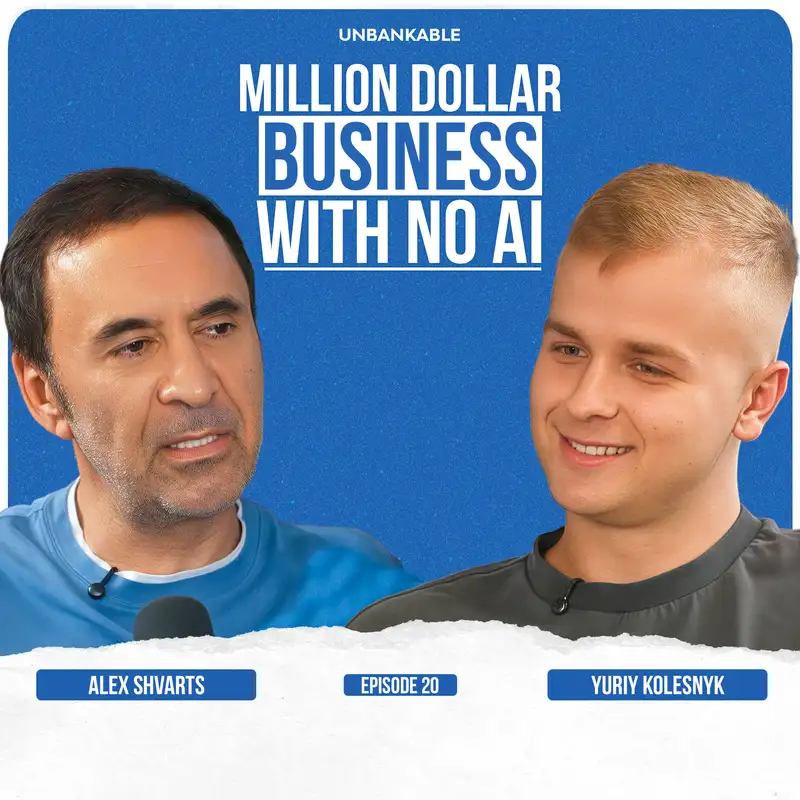
Welcome to Unbankable, the podcast about entrepreneurs who see no barriers and push forward towards success no matter what. I'm Alex Schwarz, founder and CEO Funkite. And now for the past 11 years, I've been helping businesses that refuse to take no for an answer. Today, I'm joined by Yuri Klesnik, a guy from Philly who went from buying sneakers in their basement to owning Hype Miami, one of South Florida's most recognizable sneaker stores. Yuri's story is about turning Street Hustle into a real brand when everybody said it couldn't be done. Let's dive in. Yuri, welcome. Thanks for having me. It's a real pleasure. I've met you because I've passed by your store so many times. I certainly can't walk in and afford anything in there, but it's an amazing brand. I always see a ton of people out there and you're you're doing wonderful. And I I see um an incredible social media presence. You have you have amazing DJs. You do shows there. And it's it's very inspiring to see a a young man like you with your partner be so successful. So, thanks for joining me. So, I'm going to jump right in. So, I've done a lot of things in life. I worked uh in a flea market. I was a waiter. I'm the office barrista. I make coffee. Uh but I was always curious about shoe stores, right? And and I have this question. What happens when you bring out a pair of sneakers for someone to try and they have really smelly feet? Oh. [laughter] Um, you know, [snorts] I don't know if that ever happened, you know, because maybe I don't do the sales enough, you know, as a at the store, but I think we just do it anyway. You know, if it's if it's a cheaper sneaker, we just let it do it. Um, but if it's a higherend shoe, we kind of, you know, we kind of judge the customer. You know, if they're if they're just window shopping, if they just want to see how it looks on their feet and they're not buying it, you know, we we're not we're not going to do it. You know, that's a really really good point. Right. Let and I'm we just got there very fast. So, how do you how are you able to tell a buying customer than just sh somebody who's just eyeing? You know, is there a way to tell, especially in your business? I mean, look, these are high-end items. You do these drops. I mean, not everybody can afford it. Can you read a customer when they walk through the door and say, "Okay, this guy's going to buy something or not." Do is there a way that you guys can tell? Honestly, it's it's super hard because, you know, there's times where somebody walks through that door and you would think, you know, they're not even going to buy the cheapest sneaker we have, but they end up, you know, becoming our our a bigger spender. It happened so many times. Um, you know, but it all depends on who comes in. You know, if it's a kid, you know, comes in and his dad's shaking his head no and the kids like, "Oh, I want to try it on." You know, we're we draw the line there. You don't play the whole, "Oh, dad, kid looks really good in those sneakers." We do. We do. We have a lot of tactics to to close that sale. You know, sneaker tactics, right? Tactics, clothing tactics. You know, you look great. You know, you're going to get x amount of girls if you buy this shirt, but um you know, it it's hard cuz you know, you don't want to judge somebody just by how they look. No, no, you should never judge somebody by by how they look. Certainly. Yuri, let's get real. Philly has a reputation for being rough around the edges. Did growing up their teacher that rules are meant to be broken. Did it actually make you hungrier than everyone else? Um, definitely made me hungrier. You know, uh, growing up, not only in Philly, but the way I grew up, you know, I I went through college, I had my internships, I realized quick that, you know, I have to stand out. For me, it's if you're not first or last. You know, it's you always have to do better than everybody else. And, you know, I grew up with nothing. You know, I I my parents came from Ukraine. We were, you know, refugees. Um, and I just learned from, you know, a young age to to always be hungry. you know, never settle. You know, there's times in my life where I got comfortable. You know, I got the nice shiny watch, I got the nice car, and then, you know, especially in Miami now, you know, everybody's doing better than somebody else. You look at any corner and, you know, there's a flashier card, there's a flashier watch. That doesn't mean that they're doing better. It doesn't, but it still gets to you. You know, it motivates you. It motivates you. You know, it's it, you know, never settle for less. Okay. So you started botting and just quickly explain to our audience what botting is. Botting. So um I basically used built softwares and use software to acquire uh sneakers that are limited. Um you know for example the one of the most well-known um botting like news articles was during play when PlayStation 5 released or when concert tickets became a thing. you know, after COVID, uh, concert tickets became very, you know, in demand because now people can go out, you know, after years. Um, that's where a lot of people heard about botting. You know, I don't know if you ever try to purchase a pair of sneakers or Nike or anything. Typically, if it's like a, you know, a nice shoe dropping that has resale value, if there's demand for it, it's nearly impossible to to to score. So, if you're doing one entry for a raffle, I'm doing a million with a million virtual cards, all different unique profiles. But some people call that cheating. How do you justify a sessionally cutting in front of the line of the real sneaker fans? I don't feel bad for them. You know, there there's always a smarter way of doing stuff, you know. You know, you can call me a scalp or call me whatever, but it applies to every industry. You know, you can't you can't just walk into Rolex and get a you know, a Rolex for retail that you want. You can't walk the Ferrari and get the highest spec out Ferrari you can. You know, you have to play the retail game. If there's a demand, there's going to be, you know, if there's not enough supply, there's gonna be demand behind. And demand drives, you know, value. How old are you? 28. Just turned 28. 28. You're old already. Yeah, I'm getting old. I mean, what's going on? You're supposed to like be like 30 under. Are you in the Forbes 30 under 30 yet or not? What are you waiting for? You got You don't have much time left. [laughter] Okay. At what point did you realize that just flipping products wasn't enough and you needed to build something that would outlast the next sneaker drop? Well, so I actually started, we me and my business started, we started a wholesale business and you know, the money was good. You know, it was quick money with the cash flow was great because it was money in and out. Um, and then we really thought about it long term and you know, if I step out of the picture from the wholesale business, there is no wholesale business because it's all built by network. So, you know, we we said we need a long-term plan with an exit. And that plan was to build a brand, not just, you know, that's built on us. You know, it's now I can take vacations for, you know, a month or whatever and still be able to see the same money I'm getting if, you know, I have hands on the business with wholesale. You know, if I'm not glued to my phone, if I'm not glued to making invoices and closing deals, there's no money in my pocket. And I try to get you on this podcast several times and you kept telling me you're on vacation every time, right? So, yeah, vacation in two weeks. So, so, okay, that's good. So, you've got a partner named Marcus, right? You and Marcus are both very strong personalities. I know you. I've met him. How do you keep two alphas from destroying what you've built together? Um, we are complete opposites. So, I I He's like more of the the you know, we work completely different. He he one part of part A of the business he take care of, I take part B. We have two different personalities, too. He's the guy that would go on podcast. He's the one that you see more of his face on social media. I'm the one that, you know, I'd rather do everything on the back end to make sure we stay afloat. You know, our finances are in line, our accounting's in line. So, you're the warrior in the relationship. You're the one that's making sure, hey, bills are paid and making sure. What happens when you need money? Let's say there's you got access to something that will be a huge drop and you need to go get that business funding. What do you do? you know, do you turn to your own money? Do you call investors? Do you we we call your neighbor Alex? I mean, what do you do exactly? We can, you know, that's always an option, but we never had to get to that. You know, we play very smart with our money. Um, being a, you know, we're young, but we've, you know, he started his business when he was 16. I started my business when I was 17. We have a very, you know, uh, big age gap as well. Um it was a lot of you know there was a lot of times where especially in the beginning when you open a new business and new locations too where we're like holy [ __ ] we can't um we can't pay the employees you know and it it takes a lot of uh you know just trial and error uh learning you know c especially in a retail business cash flow is so important um compared to a wholesale business where money is in and out but now you know we have to stock millions worth of inventory and it can sit for days and months and you know it's just all locked up and now you know we have we're all locked up and we can't do anything about it. Okay. So what was the most expensive mistake you made transitioning from wholesale to retail and how much did it cost you? So we still do wholesale and and we do retail but retail is our main focus. But um I think in the beginning year one when we first opened our very first store it was in Coconut Grove. Uh the story about that was um we wanted to get into retail. We knew Philadelphia was not the spot. We knew Miami is the next spot. This where the money's at. This is where the flashy lifestyle is at. This is where the you know this where the hype's at. And we opened the store. We signed a one-year lease. And we had no idea. We're like, "Okay, we're going to And this was where? Coconut Grove. Oh, Coconut Grove. Right on Grand Nav. There's no flash in Coconut Grove. We didn't know. You know, our thought process was it's close. It's in a nice neighborhood. It's close to U Miami. We're going to have a lot of traffic from U Miami. We learned that college kids are broke and you know they can't really afford even if they go to Miami, they can't really afford the stuff we're selling. Um and our first year, you know, we we bled every single month. And but you know, we kept our head high and you know the exact number it's in the six figures that we lost uh year one. Um but that didn't stop you, right? No, because you know um we just wanted to try again. We moved the store to Bickl. We're like, you know, we kind of understand the market more. We understand how retail works now. Um and retail compared to wholesale is a whole different ball game. A whole different ballgame, right? We thought our thought process were going to open a store one month and we're going to just break it in. We're going to chill. You know, we're going to open 50 stores in a few years and we're just going to chill. Um but that was not the case. retail is you know I call that the number one killer in America. You know what that is? What is it? Overconfidence. Yeah, that's that's overconfidence destroys more people than anything else. Oh, the overconfidence was through the roof cuz we you know we're like you know we had the wholesale game down so you know we're just going to do a little sprinkle a little bit on retail and you know be good there. But um yeah, first year we we lost a lot of money. We moved that location to Bickl. Um, we realized that it's a little bit, you know, not a little bit, but a lot better in Bickl. Um, and we just, you know, kept learning. We kept adapting to to the changes, you know, and yeah, now we have a location at the World Center actually performs better than Bickl. Um, and you know, we're we're every single month for I walk by every day and bless your store, you know, that's why you're doing better, right? Yeah. It's by Have you ever walked in though, son? I I've walked in once. I actually had my friend, he came to dinner. He was wearing sandals. I knew they weren't going to let us into the restaurant. We walked in there. I mean, the guy goes So, we I made him buy a pair. I I again, I just I can't It's very flashy for me. So, I'm very lowkey, you know, and plus um but no, it's an amazing store and the energy and the vibe and, you know, the sales. I've walked in there actually more than once. Um but uh yeah, no, you've you've set up a really great operation. Let's go back to something. So, how do you handle inventory? How do you know when to get rid of a product that's just sitting there and losing you money? Cuz inventory is an investment, right? And unless that investment is returning and it's just sitting there, man, you're Yeah. not a good You're not in a good spot. So, what do you do? How do you know, okay, this this is just not moving. How do we get rid of this? You you're not always perfect with inventory. Nobody is, right? Some things, you know, just fly and probably have limited access to them. I mean, I've seen chrome hearts in your store. I've seen brands that just, you know, people are going to buy it, right? But some stuff you buy and it's just sitting there. So, how do you manage getting rid of stuff? Um, well, see, compar in in this retail, it's it's not we're not like a regular, you know, clothing store or whatever. We rely on trends and with that model, it's agent inventory becomes a very big problem because trends change really, really fast. you know, the what we were selling three years ago, there would be zero. I wouldn't even take it for free at cost in my store because I know it just wouldn't sell. It would take up space. Every single month, we're cycling through inventory. And I think how we got we got a good grip on taking inventory out and bringing new trends in because of our wholesale business. you know, our wholesale business, we were selling to stores like ours and we kind of had the intel, you know, what are what are our customers, what are wholesale buyers asking for, you know, what do people want? What what's the new trend? We got a really good u grip on what is the next thing and you know, what is out? And I think coming from wholesale into retail, we kind of have expertise on both. And you know, every single month we I or actually every single week I give a sheet to my uh partner. It's a agent inventory sheet. He looks at it and we every single week we go through and say, you know, we got to get rid of this brand. We got to get rid of this style. You know, something's sitting, you know, the sellrough rate. So, what do you do? You just like you see something's not moving, you'll you'll go on your wholesale side, call the other guy, see if you could flip it to them or something either at a loss or or, you know, or break even or just a slight profit or get Yeah, just move it out. move on to the next thing, right? So, you don't get attached to something, right? It sounds like you you move with the times, right? Yeah. Exactly. We just had a really good question from the studio audience over here about markup. How do you know what is the right markup? You know, so a lot of So, again, let's go back this podcast. Why am I doing this, right? You know, I'm doing this because I've worked with so many business owners and we provide working capital and and business funding. And I've seen a lot of business owners make the same mistakes, right? So, what am I trying to do? I'm trying to give back, give advice, give tips, bring on successful entrepreneurs like yourself to help people maybe get there faster, not repeat the same mistakes. You know, I always say if we can make a a difference in one per, you know, person's life, it was worth living, right? So, you know, let's talk about markup. A lot of people who own businesses, and that's a great question from our studio audience today, that there's people don't know how to properly mark up, right? And when do you mark up? Sometimes, you know, marking something up five times makes sense. Sometimes just making 10% makes sense. How do you decide what the right markup is? Um, well, before we had uh, so just I'll throw it out there. We operate on a 35 to 40% margin. All right. So, I know what how much discount I need to ask for every time I walk in now. That's it. That's it. [laughter] We're walking around picket signs. I needed this sale. Just joking. Go ahead. Is that a typical markup in your industry? I would say so. Yeah. So, before it was it was much lower and then when we really got into the numbers, we're like, you know, we're struggling. you know, we we need to make either more sales or a higher margin. And we've noticed that, you know, a lot of a lot of stores, they operate on like a 60 50% margin. But, you know, it's it's moving. It's kind of two things. You know, the higher margin, lower sales. You know, you find have to find a happy place where, you know, your customers are not saying, "Oh, you know, shaking their head at us saying, why is it so high?" Um, but we found about, you know, 35 to 40% is like the sweet spot and that's a gross margin. I mean, look, you've got expenses and you're you're there to make money. I mean, rent and employees, employees, I mean, you know, and the vacations, I mean, that's all expensive stuff. It costs money, right? Um, if you like this uh podcast and um there's something good that we're sharing with you, please click subscribe, drop some comments, send me a message what and who you'd like me to bring on and what other information I can share with you and to help you succeed faster and get to the results that you want. So, um, how do you deal with um, competition? Right? So, there's there's other stores in the area, right? Is it about having like finding the unique brand or product that's really happening right now? Um, is it, you know, just building a stronger brand? Is it relationships? Like what do you think is why would I go to you instead of going somebody, you know, a mile away and and buying buying the same thing? What is it that How are you going to win compared to the guy that's uh I I think competing with you? Yeah, I think it's the um well, it's it's multiple different things. Of course, you know, I we always have people come in saying, you know, you have the best prices. Uh but the biggest thing I think it's the experience and and and the service that we provide for everybody. Um, you know, we have we make sure every single week that our staff um every staff has a signed customer that walks through the door and we make sure that they're getting the um you know, the service that that they need. you know, um, you know, if if you come into my store and you're, you know, a size, you know, 34 chrome hard jeans and you bought that before, every time we will get a size 34 crumb hard jeans. Somebody from my team will be reaching out to you. We will find out what your birthday is. You know, if you're a high spender, you'll be getting gifts from us. You know, we we I'll let you know my birthday, by the way, before you leave. [laughter] Um, and I don't buy anything until I get a gift. So, I think it's important you start gifting me [ __ ] Right. Topender. Um, okay. And then the experiences too that that we, you know, so it sounds like you make it very personal with customers and you try to and that I think is important. I always tell people, look, sometimes people say, "Oh, you know what? I have a I have 300 people going through my coffee shop every day, right?" Okay. But a lot of those people, you know, coffee is a habit, right? Um, a lot of those people are keep coming back. So the more of them that you know and the more of them that you build a relationship with, the more you're going to have a solid base, right? So I think that's really important. Um, you know, be before we had the cameras rolling, we talked about, you know, Ronnie Fig and you know, you want to be the next Keith, right? Um, but Ronnie Fig, I mean, he had decades to build that empire. What makes you think you can compress that timeline and do it faster? I think just based on our trajectory, I mean, Kith has been around for, you know, 22 years. And I think where, you know, we are year u we're year four now. It might sound like an ego thing, but I think we're where he was at year four and where I'm at year four. I'm I'm I'm way ahead of that. And, you know, if you you know, if I had, you know, 18 more years, um, you know, I would be way bigger and I will be way bigger than Kith. And, you know, but, you know, got to give it credit where it's due. We're not a competition, you know, he's a retail store. Um, he's our inspiration. We've created our He's an inspiration to a lot of people. We created our brand, you know, studying Kith how they do it because of just everything they do from their collaborations to the store aesthetic to their experience, you know, to the everything, the quality of their their product. To me, they they hit the nail on the head. You know, we even when we first opened our store, we kind of even thought about like doing some sort of thing. how you know Kith has Kith streets you know they have the ice cream thing we wanted you know like all of our inspiration came from Kith basically because the stores like ours the resale stores in our industry there's not one store that I look up to because I I I think nobody does it right it's ran by kids it's ran by just people that you know wanted to resell sneakers um that don't really care about building a brand they just care about you know making money and you know If [ __ ] goes south, you know, it goes south. I agree. I think uh Ronnie and Kith is is it's an inspiration. Um we don't see there's only a handful of people in the history of fashion and retail and American from America that were able to build such successful brands. Um and it's great and it's also I'm I'm happy to see that inspire like a brand like that inspires young people. Let's [snorts] think about this. So, we know social media drives a lot of sales today, right? You guys are very active. What happens if tomorrow social media disappeared? Miami is not hot anymore and you had to start over with just, let's say, $10,000. What would be your first move? Do you know exactly what we've done in the past? You know, when I started, you know, selling sneakers, I started with a Discover student card. had a $400 limit on it. And you know, I found ways to borrow money, whether it be from family or or friends, give it back. And you know, they say, um, you need money to make money, you know. And I found ways to to do or money makes money, right? Money makes money. Yeah. Yep. Um, and you know, it went from, you know, selling one pair of sneakers, two pairs of sneakers to now having, you know, millions dollars worth of inventory and just little by little. Um, so you have no doubt if you had to start over again, you'd be able to pull it off. No, I I I know myself. I know like I I'm hungry. Um, I I don't settle and I know I won't fail. Good. That's very good. So, what advice would you give someone who's struggling right now? And a lot of business owners struggle, right? Um, in fact, I think most even business owners that are successful struggle because there are challenges every day, right? What advice would you say to someone who's struggling right now who's who doesn't know how they're going to pull through, you know, this month or next month? You know, we had some very difficult conversation with my business partner and when we were in the red um and there was times where we were thinking like, hey, do we even renew that lease? You know, do we just go back to what we were doing? Um, you know, just keep, you know, keep keep moving forward. You know, there's always there's always going to be your bad days. There always going to be your good days. Um, and there should be more good days than bad days. Um, to me, if you're in it, you know, going back before before I started this, I was actually going to go into law school and I hated it. You know, I was just trying to satisfy my parents so they would just shut the [ __ ] up and leave me alone while I was selling sneakers, but I was still studying for the LSATs. And to me, I know I didn't want to do it. I don't care if I was successful. I was not going to be happy. So, I think if you're doing something, I'm going to make sure your parents watch this, by the You got to get the Ukrainian translation though. Yeah. [laughter] Okay. Um if you're doing something that you're not that you don't enjoy doing, you're probably not going to be successful at it. You know, do something that you love. There's so many ways to make money now. There is, you know, from social media. There's I meet so many people, they meet they do money in the in the in the dumbest ways possible. Um do something you love and you you know, be successful at it. Interesting. So, I tell you one thing. You know what I say? There are no losers. Yeah. There's just quitters. Let's talk about accounting. You do your own accounting. Yeah, I fired my own accountant to do it myself. Okay. But you got the brain skills for it, right? You've got the mind for it to do it. What would you say? Okay. What is it that you do need to outsource? Where do you need help? Where do you go out to get help? For me personally, on my side of the business, it would be the marketing and the social media stuff. When it comes to that, I'm not good at that at all. If you you follow me on Instagram, I don't have any posts. My profile picture is just a color. I I don't do that. I I can't do social media. Um I tried it. What about Marcus? That's where he comes on the other hand. He's the opposite. He's the one that manages all of our social media, all of our content, all of our videos, all the video ideas. Um when it comes to marketing, he does that, you know. So, you have a good balance. Really good balance. Yeah, we're completely But you're But but would you agree that if you don't know something, you're going to go and talk to somebody who does to get the right advice and opinion. So, a lot of small business owners are not good at so many things or they don't have partners that, you know, I do this, you do that, and that's where they fall behind. I always say, look, you know, a great chef isn't a great accountant. Yeah. Right. So focus on what you're strong at, build what you're strong at, develop that, and you know, today you can hire people that are really good, cheap. You know, internet, who knows? AI might do everything for us soon, right? It might leave a lot of people unemployed next year. That's what I'm really afraid of, right? That it's going to replace a lot of jobs. And you know, there's a big workforce in Miami now, for example. A lot of people move here to work because there's a lot of opportunities, a lot of companies moved here. and we don't know what's going to happen. It's it's a little bit scary. I think uh it is scary cuz like like going back to um the accounting, you know, I use Claude now for accounting and every single day I talk to Claude and it does all my accounting for me. I get a daily report of what I need to do. It's basically like my assistant. It's just telling me what to do. That's amazing, right? Yeah. And it does, you know, I have Claudia instead of I'm just joking. [laughter] All right. So, how do you respond to people who say resellers like you are destroying the sneaker culture by by making everything about money instead of passion? I don't care about them. Honestly, you know, I you know what are you going to do? You know, there's a reason why something has resell value. There's a reason why there's demand above it. You know, why are you blaming me that you can't get a pair of Jordans? Why don't you blame Nike for not making enough for everybody, you know, for not meeting demand? I'm just taking advantage of it. I'm playing the smart way, you know? I'm capitalizing off this, you know. I'm not here to to be a sneaker collector. I'm here to make money. When you look at me, Yeah. and I'm a lot older than you. [clears throat] And I look at a lot of this younger generation like you, and you guys are fast, smart, sharp. I mean, a lot probably smarter and faster due to the um the vast amount of information at your fingertips. Yeah. Right. Do you think you have an edge over someone like me? I mean, it depends. You know, you have experience. It depends what industry we're talking about. Do you think I can go into your business and kill it? No. Why not? Unless you really learn the market, unless you really, you know, learn the business really, really well and spend years in it, you know. No. You know, if I opened a business like yours, you've been in business for 11 years. I've been and I probably business for a few years, you know, in the same business, I probably won't be as good as you. You know, you you nobody can just come in and and and even if they very busy. But do you think it's just because of your experience or do you think that your generation is more cut out for certain businesses? I think it's both. I think that's a really good point. I It's definitely cut out. You know, it's you know, when you were you're making me feel very old and you're challenging me and I'm going to I might just have to open a store next door to you. Okay. And just I'll get I'll get all my, you know, product from Marshalls and I don't care. Okay. [laughter] But uh no, I do think that um experience is important at any age. I do think that there are certain industries and businesses that will probably be operated by certain age groups that relate to it more. Like I don't see a guy myself being able to to do what you do because I'm not in that world. I'm not in that, you know, the sneaker world where I I don't get it right. You know, you know what the young kids call it? What? You have to be tapped in. Oh, you have to be tapped in. You have to be tapped in, right? Tapped in. All right. [laughter] Okay, I like that. No, but that's that's the reality, right? That's the reality. And a lot of young kids don't respect old people because they think they know it better, right? You respect old people with experience? Oh, yeah. 100%. You ask for help? Yeah, I do. And I'm not going to ask for help from somebody younger than me. So, you won't? No, I would ask you for help. Well, because you have something that I pro, you know, look, I think everybody has something unique, right? And I often ask, you know, the opinion. So, I'm one of those people that I observe a lot. I'll walk into your store. I'll watch how you guys operate. I'll watch how your salespeople operate. I talk to you. I'm reading you. I'm trying to understand what you think, how you're doing it, how what your approach is. And I believe that at any age, um, uh, learning is important. No, reading people is important. Watching how people do stuff, right? you know, um I think it's it's critical never to close your mind to new experiences and to learning more. And certainly I believe that in today's world, there's things I learn from young people. My daughters, I mean, they're great. There's things I learn from them every day that I just don't know. And I and I and I love it. I love it. The biggest thing I like about life is learning something new every day. All right. All right. So, if you had to choose right now, double your revenue but work 80 hours a week or cut your revenue in half but only work 20 hours a week, which one would you pick and why? I mean, I I I would do double and and work more. Um, I feel like that's that's a given. Um, every month we have a record-breaking month and I would uh I would be devastated if if it cut down even 30%. Um, and by half, you know, I that's like what what we're doing now. That's that's to me that that's the norm. That's the standard. So, good. Good. I like that. I like that. A lot of people get complacent. They start to make a little money. They don't want to work as hard. I work to me. I still work 80 probably more than 80 hours a week. Yeah. I don't even know. There's not enough hours in a week that I need to fill what I need to do. Exactly. So, as a small business owner, what keeps you up at night?
What are you scared of, man? What I'm scared of? Scared of failing. Scared of uh, you know, we we've almost failed before, year one, year two, and that was a nightmare. And I would I, you know, we do I I do everything to make sure we never have to revisit that. We never have to fail again. Um, but then again, you know, there's always going to be failures and as long as you you learn from them, you know, that that's all that matters. Everyone's going to make mistakes, but it's as long as you learn. Um, you know, um, fear of failure keeps you going. Yeah. Right. Cuz you're you're keeping it real and you're thinking about, oh my god, what if this doesn't work? So, I like that the hype didn't go to your head. I like that you're very balanced. The hype could be a pun, right? you know, so I like that um it didn't go to your head and that you know, you're keeping it real and and I think that's important. All right. So, if tomorrow you needed $2 million because you had a access to some new stuff that man, you could just do a drop. You know, you're going to flip. You're going to make a lot of money with it. So, where would you get that business funding? Who would you turn to if you don't have $2 million? What would you do? I mean, traditionally, probably go just go to the bank. Have you ever gone to the bank to get a business loan? No, we never gotten any type of lending. We've actually had um this will be interesting. Um we operate under Shopify and Shopify does Fundy as well. Yeah, sure. It's a competitor of ours and we learned how [ __ ] that is after we took on a loan. We took on a loan about two years ago and the way they operate is there's a repay they aim for like a 9-month repayment period, right? You know, they give you a percentage, right? You know how they Yeah. Yeah. And then you're like, you know, it's not bad. Then you realize, you know, it's not annualized. The repayment is targeted for 9 months based on they they do they do disclose that you can Well, not really because they're taking a percentage of your sales. Um well, but the the good part of is that if your sales slowed down, their payment would take longer also, right? But they have a way to calculate an estimated term. The thing is is as soon as we took it on, our revenue doubled. Oh, so our projection got cut in half. Did that but by taking that money, did that help you double your revenue? Did you take that money and put it into product and sell more? It did, but not as much. It's just we've opened a another loc Oh, no. So, I'm sorry. The World Center location, we opened it in November. Not this not this previous, two years ago. Um, we opened in November and we took on the loan around the same time, I think. And then by April May is when World Center location the revenue doubled there and you were running everything through Shopify. Everything through Shopify. Yeah. So now you know if you you know the offer you know it was okay. It was based on 9 months 10 months repayment period. Now I got to cut it in half. So there you have it. A very unhappy customer from Shopify Capital. Okay. Very unhappy. I hear bad things. I'm just joking. Uh, but look, your timing sounds like it was off [snorts] because had and I always say that, you know, applying for funding from revenue-based finance like Shopify Capital is also like we are, it's about timing, right? So, you applied right before your business took off. That's why your payments were accelerated and you repaid faster. So, timing funding is is really important. Now, sometimes people say, "Okay, listen. I need this capital because I'm going to open a location, buy more inventory, my sales are going to double, but without that capital, I can't get there. Then it's worth it, right? So, you know, it kind of like depends how you look at it. It's worth it if it's like a fixed amount, you know, every single month like a traditional loan. But if it's some people and for some people that works, but you're, you know, like traditional loans also have limitations. Yeah. Traditional loans are going to look at your credit history, time in business, your financials, your everything. And chances are you'll never get from a fast enough or the type of money you need from a traditional business like you got from Shopify Capital or or Funkite. But also, um there's the other side of it. You know, with bank loans, you're personally guaranteeing it even if your business fails, right? And if your sales are slow, that payment is still fixed. You got to make that payment, right? They're not going to give a [ __ ] They're going to want their money, right? And uh so there are pros and cons to both. And and certainly the right it's important for every business owner who's trying to get business funding to look at what works for him, what can they get approved for, and most important, what are you going to do with that money? How are you going to put that money to use so you can make more money with it, right? Yeah, I always say, look, if you need to borrow money cuz you haven't paid your employees in 2 months, you got a problem. You don't need you don't need a loan. You need a doctor because you're not analyzing your business correctly. You're in trouble and you're just going to dig a bigger hole, right? Okay. So, listen. You're building a brand in Miami, but you're competing against global players with unlimited budgets. What's your unfair advantage that they just can't copy with more money? Again, the the experience that that that we provide for our customers, you know, we treat everybody like family. We make sure, you know, we don't rely on foot traffic. We rely heavily on outreaching to people, bringing people in like, you know, create establishing [snorts] a connection with everyone. You know, we're not just a lot of stores like ours, you know, especially in malls, all they don't give a [ __ ] about anyone. They just care about the foot traffic. Grab that sale. We're different. You know, if I closed my store down and I turned, let's say, into online store and I kept the same salespeople, our numbers would drop a little bit, but we would still be making, you know, a lot just by using the connections that we have, you know, the from from years in business. All right. Okay. So, if a 16-year-old kid walked in your store tomorrow and said they wanted to build what you've built, but they have no money and no connections, what would be the first thing you tell them to do? Hit you up for some money cuz you hit me up. Hit you up. [laughter and gasps] You need money. I mean, I'm not a sugar daddy and Only Fans, okay? I'm just telling you. But what would you give them? I mean, look, somebody sees what you do. They're inspired by it and they want to do what you do. Have you taken people under your wing to teach them what you do? We actually had somebody that uh their goal was to open a store just like ours. Um not sure if you did it. Never followed up with him, but um But you don't mind, right? Yeah. Teaching and giving back. Of course not. Uh you know, um you know, if you're 16 coming to my store, um have no money, you'll need to find some money cuz I inventory that we sell is not cheap at all. You know, we have millions of dollars worth of inventory in the back of the store. Um, and you need a lot of money to stock the shelves to get people going, you know, get in. When you first open the store, our inventory was terrible. I have no idea how anybody walked in. Yeah. It was, now that I look at the old pictures, I'm like, how did we why do we think this was a good idea to even open it with with nothing that we, you know, in the store? Um, but yeah, I mean it's not like it's not a business that you can just open with a low budget and, you know, let it ride. It's not an ice cream shop, you know. It's the yogurt shop next to you. That they're killing it, man. Yeah, we have our own smoothie there. Oh my god. Smoothie. Oh yeah, hype smoothie. I have to try that. I can afford that. But I don't know. $12 little thing of yogurt. Out of control. It's like 20. Well, I only I get a little like two teaspoons. Like I get two spoons. Like I can't afford like you. It's ridiculous. They make a killing in there. They're clocking it in there. Oh my god. They're clocking it in there. Yeah. Great neighbor. Um so listen, looking back at the kid in the Philly basement buying sneakers, what would surprise him the most about where you are today? You know, where I'm at now as I would never expect to, you know, be living the lifestyle I live now to to operate, you know, two business like this. As a kid, it was always a dream to have a store. I I remember I always looked through the pictures of of just me telling mom, you know, these couches got to move cuz this is my little warehouse now and I'm going to sell sneakers out of here. And to go from that to, you know, h being in the two most popular areas in Miami, um, and honestly, I think Bickl is one of the most popular in the US right now. um to have stores like the business that I have now. You know, I give myself a pat on the back. You know, I came from nothing. We I I we grew up with, you know, divorced parents. Um you know, it wasn't easy. Everybody has a story, but you know, I never I got into sneakers not because I was a sneaker head. It was because I just wanted a pair of sneakers, you know. Okay. Do you have any idea what this is? an hourglass, right? Yeah. So, I'm gonna You know why I use this? Why? When people come in here, my office to tell me about something, I could just see this is going to be a rambling session. Yeah. Right. Actually, I should have used We got this intern, right? And he created an amazing thing for me yesterday and I said, "Can you turn to Can you make it into a PDF?" Dude, I should have used this thing and said, "You got this much time to make it into a PDF." It took him like the whole day. I had to figure out. amazing thing he created. Couldn't figure out how to put it into a PDF. [snorts] So, I'm going to just flip this over and tell me why. Ready? Yeah. Why I should not open a store next door to you and start selling sneakers? Convince me not to do it. Well, we have first of all, if you can't you can't even open next door next to me. I can open. Oh, trust me. I got pulled. We have rights that uh I got pulled that you can't you can't do it. But you're just going to get crushed. Why? What do you What makes you think I'm going to get crushed? Cuz I got access to money. I got access to designers. You can put as much I can get any drop I want in a heartbeat. Okay. What makes I mean you're not convincing me not to do it yet. You're just you're just using big words. You're going to crush me. I'm uncrushable, man. I'm uncrushable. No. No. I'm uncushable. You won't be able to open. You won't have the same inventory. You don't have the knowledge that we have. You don't have the connection. I'm going to buy knowledge. I'm going to take the top people out of all of your competitors and your best sales happiness, but it doesn't buy Oh, it buys talent all day long. It can, but you know, I I don't think anybody does it as as good as us. And it's a proven fact cuz I see businesses closing every single day in Miami in our industry. And every single month we're hitting, you know, record months. You still haven't convinced me. Well, you're maybe a hard guy to convince then. [laughter] Yuri, thanks for keeping it real with us. Your your story proves that when you refuse to see barriers, you find ways to win that others never even considered. Um, and thank you for joining me. I I really enjoyed this and I I really look forward to your success. I think you're definitely going to go far unless I open a store next door um and give you a run for your money, but I'm not doing that. Um, thank you so much. This was great. It's it's um it's amazing to see young people like you uh don't take no for an answer and have a vision and you're very you're very detailed and meticulous about actually operating a business and and that's that's very important. Everyone listening, remember success isn't about having permissions. It's about having the vision to see opportunities where others see obstacles. Thank you for tuning in to Unbankable. I'm Alex Schwarz. Drop a comment. Subscribe. Let me know who you'd like to have on and what else I can share with you to help you get to where you want to be. Thank you and see you soon.