How to Monetize a Podcast and Build a Media Business | Gary “GC” Coichy
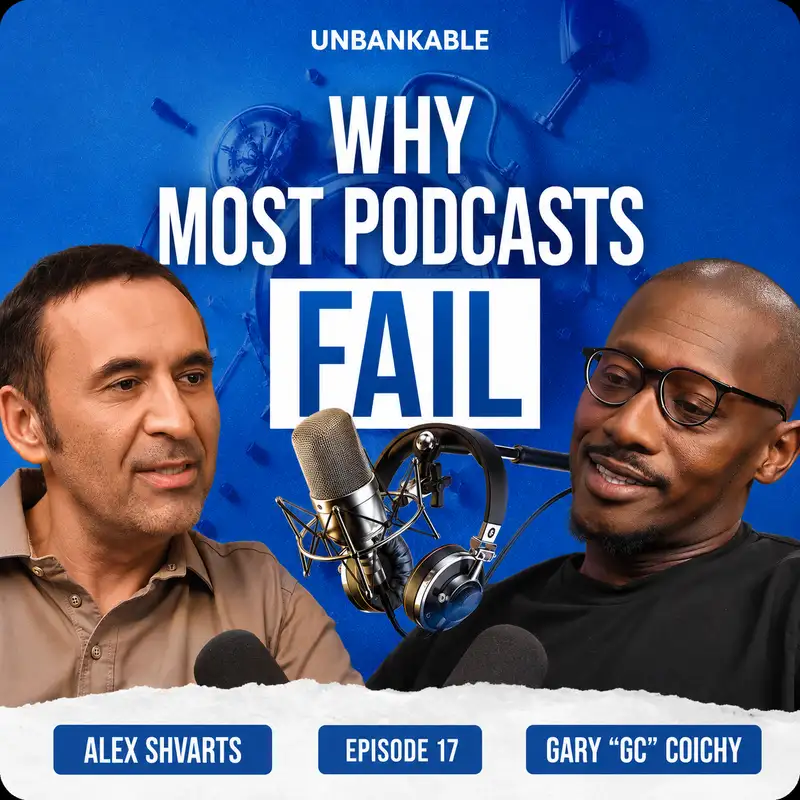
Welcome to Unbankable, the podcast for entrepreneurs who won't take no for an answer. I'm Alex Schro, and today we're talking about something that's reshaping the media landscape, cultural content, and how to monetize authentic voices at scale. Because here's the reality. Traditional media is dying, but smart entrepreneurs are building empires by connecting brands with audiences that actually matter. Let's dive in. Today, I'm joined by Gary GC Quashi, founder and CEO of POT Digital Media, which he calls the first and largest cultural content hub in podcasting. Gary has built what he claims is a 1,586% growth story over three years, landing Pod Digital Media in the Inc. 5000 list. What makes Gary different? He's not just running a podcast network. He's created what he calls an audience marketplace that helps brands authentically engage with multicultural and high- growth audiences across 30 plus markets. And here's why this matters to our unbankable audience. Gary took his marketing background working with brands like BMW, Dell, and Lassetain and built his own media empire. He's here to share how entrepreneurs can turn cultural authenticity into serious revenue. Gary, welcome. Thank you for having me. Happyour,
excited to be here. Thank you for having me. Master at networking. How do you do it? Cuz I just can't deal with small talk. It's like I I can't I'm going to like I I don't know how people do it. They they show up and then d I I can't do it. I hear you. I mean in networking networking for me it's about being in the right rooms and being intentional about being in those rooms and what is your objective uh of being in those rooms and who are you looking to connect with? And then once you basically go in with that mindset, it allows you to still be your authentic self and not overselling it because you're there, you're operating with certain intentions. And if you're in the right rooms and in your product or your services, speak to those in the room. It becomes it easier to have those conversations. It just flows. You don't have to force it. Okay. How do you tell an entrepreneur cuz this is so why am I doing this podcast, right? I want to give back. I want to help. So I want to help entrepreneurs get to where they want to go faster. um show them a lot of the mistakes they're making because look, we've worked with over 300,000 businesses that needed funding, right, to grow their business or whatever the reason was, right? And so this isn't about promoting Funkite. This is about giving back and helping people, right? So you're saying an entrepreneur needs to network, right? How does he find the time? What is really the right networking for a chef? He has to become part of your process. Part of your process is ensuring that you're connecting with other chefs. you're going to the right rooms, you're going to the right gallas so you can meet potential clients, and then you ensure that the clients that you're servicing are becoming word of mouths. They're able to help you promote your business. So, at the end of the day, you can't be in every single room. It's it's it's unrealistic. It's impossible, right? Right. So, it's being intentional about identifying the right places where you need to be at and then finding ways whether it's yourself, whether it's someone from your team and to make and and ensuring that you can be present and and showing up to these, you know, and and and being in this and being in those rooms. So, at the end of the day, it's it's all about intentionality and your your end goal. What is your end goal? And what is it that you're trying to accomplish? Who are you looking to connect with? And then it also becomes, you know, you let's get let's get let's get the nose out of the way. Let's get the nose out of the way. Let's talk about nose. Yeah. Let's get the nose out of the way. Let's get the people that don't want to connect with you. When's the last no you got? I'm sorry. When's the last no you heard? Yesterday. I get nos all the time. It's it's it's part of the business. You know, at the end of the day, we have a service, but we're also, you know, we're we're a sales company, right? Because we're selling our services. We're selling our audiences. We're selling the talent that we work with. Not doesn't necessarily mean everyone wants, you know, wants to buy you. And they may not want to buy your product right now. So, a no is not is not a no forever. It's just not yet, right? right now. It's just a no right now. So, we operate with that mindset. So, it happened. So, let's get those nos out of the way. So, it's the same thing with networking. It's the same process. Uh, you know, I grew up in New York City and I'm aging myself right now when we used to go out, right? This is the era where you actually have you have to ask the bartender for a pen in order to get a girl's number, right? So, therefore, you have to get to the nose quick. You have let's get to the let's get the nose out of the ways until you can find the one girl that's going to tell you yes. That might be at 12:00 a.m. or that might be at 3:00 a.m. But or maybe never. Or maybe ne maybe not tonight. Well, not for you, but you're you're you're a handsome guy. So, I think I think you got the number every time, right? But then uh but then sooner or later sooner or later again, you you you're perfecting your craft. You're perfecting your pitch. You're perfecting your approach. Sooner or later, now everything becomes very organic to you where you're able to have those conversations because it's very fluid. Very cool. So, a lot of people today try to bypass experience, right? because there's um there's it's just so easy today just to go do something, right? Like they bypass experience. So you worked at Omnicon Media Group, right? Behemoth. Behemoth. Do you think entrepreneurs need some experience before they go on their own? Uh because you know many today just try to bypass. They think they could just swing it and they could do it. Yeah. Baptism by fire needs to happen in some shape or form, right? So you don't necessarily need I know a lot of folks that that are successful by working in corporate America and I've know I know a lot of others that never worked in corporate America but they they've found a way they've managed and they've maneuvered until they reach success right um so at the end of the day it's it's it's being a sponge and and being ready to learn whatever that means whether it's in a corporate environment or whether it's baptism by fire of you doing it yourselves and going through some of the you know going through the various issues that all the issues that entrepreneurs face sooner. You have to have baptism by fire. You need the experience in order because if you're not learning, you're not growing, then sooner or later, whether it's a it could be a $5,000 mistake today or it could be a $100,000 mistake next week, right? So, so you certainly need to have that that learning curve process, you can't escape it. So, let's talk about hiring just for a second. For sure. Um, you hire people, right? 100%. Hire and fire and hire and fire, right? So, I say um pace your hires and accelerate your fires. Pace your hires, accelerate your fires. Yep. Yeah. Because like you need to make sure you're hiring the right people and somebody that doesn't work out, get rid of them quickly. I don't want to get in too long about that. Right. But I want to talk about this. When you're hiring, do you want to hire somebody older with a lot of experience or somebody younger that you can groom? That's a great question. I don't like the word groom. Okay. I I don't like the word groom, but I do like the word someone that is I don't mean groom%. Yeah. Yeah. No, I understand term, but you know, help somebody in your way. I need whether you're older or younger, I still need you to be a sponge. I still need you to understand. I need you to bring your experience and the knowledge. I like that term in the in the in the things that you know. However, how do we make it work here, right? Because our culture is different. Our product is different, right? The customers and the consumers we speak to are a bit different based on their needs, right? Some clients who are looking for foot traffic because it's a it's a car dealership. Other clients who are looking for web traffic because they're looking for for you know they want to sell their services and they're looking for online leads, right? So you have to be a sponge to sort of really understand our process and we marry that with your process and then soon or later we find that we find that blue magic where we can actually works for the both of us because it's a marriage at the end of the day. If I'm hiring you, you have to like me as much as I like you. You have to be as excited to want to work with me as much as I like to work with you just as much. Yeah. So that's the approach that we take. But I do like the How quick do you realize you made a bad decision? And do you hold on to it? I'll say 60 days and under. You can tell, right? It's we're very lean and very nimble. So therefore, and we don't have to micromanage. Hey, you come on board, we can tell whether or not you're taking ownership, accountability, whether or not you're learning, and then we can just see we can immediately see the the type of value you're bringing to the business. What do you tell a small coffee shop that's got one barrista and the barrista makes great coffee but has bad people skills is just terrible but he doesn't know how to replace him. What do you do? I mean immediately find out what the you know if this person is coachable like coachable or are they even willing to be coachable or they're even willing to sort of be a people person so they can adjust the attitude. That alone right there if that's not going if if the person is not doesn't have a coachable mindset or or not willing to be coached that could immediately tank your business. So, are you willing to take a bet on the guy because he makes great coffee or are you willing to teach him at the same time to pay or go out there and find your next hire? Sure. Yep. Okay. So, you claim like this 1,586% growth over 3 years. It's a massive number. It's a huge number. It's a huge number. What's the real story behind that growth? And and what drove it? Was it a big contract, organic demand? What how did that happen? It was a combination. It was a combination of organic demand. It was a combination of us having the quality inventory to meet to to match the demand and it was just you know and the the way we've diverted our product overall product offering that sort of in the marketplace responded to it right so we started you know pod digital media were the first and the largest audio company in the country that caters to diverse audiences which we call growth audiences right African-Americans Hispanics Asians LGBTQ LGBTQ plus audience so explain that to us for sure diverse audiences right so you So, let's let's go from the beginning. Why would I turn to pod uh pod digital for sure? Because you're looking to reach, you know, you're looking to reach African-Americans and Hispanics, what we call diverse, multicultural audiences, which is of course now the new mainstream. So, I want to start a podcast. I go to Pod Digital. No, you you start a podcast. If you build it, we will come. You start a podcast. Okay. So, you start a podcast. You have a sense of consistency, right? You have you have some episodes under your belt. You have a you truly understand your audience. Who you cater to? Who's tuning in? Was is it entrepreneurs? Is it moms? Is it, you know, is it college students, whoever it might be? You have a true sense of understanding of who your audience is. And then now we have a conversation. You guys haven't called me yet. What's going on? I mean, you you're on our radar now. So now we can have a conversation. Now you guys are going to Okay. Okay. So I feel I feel underprivileged here. Okay. No, you're here. You're good. You're good. You're good. You're good. So So then now that you have this audience, you you understand what your audience is. We can have an an educated conversation about who you cater to and the quality of the content you're putting out. Then now we're trying to see which advertisers that we have that might that that could be a good match that could be a good fit for the audience we cater to. So you're matching advertisers and you're you're you're actually also providing access to audiences, right? For sure. So we so advertisers look at us as a network because we're a podcast network. They look at us as a network because we are centralized location where they can reach those diverse audiences at scale. a podcaster look at us as an agency because we're an agency that's brokering deals in their behalf that's bridging the gap between their shows and blue for sure. I mean Joe Schmo can't walk into McDonald's and say, "Hey, I'm a podcaster. I would like, you know, I would like to sort advertising your chicken nuggets." It doesn't work that way, right? They need to understand you have reach and scale. You have operation, you have an infrastructure that they can tap into because they're moving 100 miles per hour because they have nuggets, they have chicken, they have they have crispy chicken, they have Big Macs to sell and they can focus on every single small player that's out there. So therefore, having a centralized location where they can say, "Look, we're looking to reach 25 to 35 African-American male, African-American female at scale between 420 and and and 620. We want to run a campaign for 2 months. Where can we go and have access to those audiences at scale and where can we find success?" It's very hard to get real ad dollars. I know firsthand. Yeah. I mean, you have to build a product. I was in a media business at a fashion luxury magazine and it was it had a very good circulate paper magazine long time ago and we had a very high netw worth audience and it was impossible. You call you know how I got um the Versace campaign when Madonna came out. She did a Madonna did an exclusive Versace campaign. This was 2004. You know how I got it done? I sent caviar to the buyers. I forget it was media comma I don't I forget which handle it right I send the guy I mean we we called nobody talk I send the guy caviar boom the next day he calls me I'm in there we close the deal that's amazing right but how many people afford to spend you know $100 to get an appointment right like a meeting right and that's what makes our and that's what makes our company so valuable right because podcasters you created content you you you're great you have this great idea and you've been able to build you know a good platform but then now you're looking you're looking before we monetize it, right? We're already we've already done half the work. We're already in those rooms. We're already We're already at the whole Incredible. I mean, so I mean, look, everybody's doing podcast. Even I'm doing podcast now, right? So, if I could do it, anybody can do it. But, you know, so they've got an established podcast. They they they're really I mean, the content is worthwhile listening to, right? Cuz again, and people are tuning in real value. They reach out to you and say, "Hey, can you guys help us?" Absolutely, 100%. So, it's not like you're just going out to them. People reach out to you. It's a two-way street. It's a two-way street. A pipeline of podcast we have in I think that's important. I think not everybody's doing a p like I'm doing this like I don't care, man. I don't care if I get a sponsor. I don't you know, somebody offer to have a sponsor because the audience could benefit from the services that the sponsor, but I'm not doing this to get sponsors, right? Like, but you would love a sponsor. If it comes, you would certainly be open to it. No, I don't care. If it comes, it comes. And if it's a fit, if it's a fit, that's a great position to be in. Yeah. But a lot of people need that because they're trying to make, you know, the podcast their livelihood, right? So, and it's hard to get the sponsors, right? Like, you know what I mean? Um, which leads me like to and I didn't ask this in the beginning. So, so one day you figure out you you want to start a business on your own. No, I've been in the media business for, you know, for 22 years. But how did you launch this? This was your baby or not? No, absolutely. I'm the founder and CEO day one. From day one. Okay. So, no, you come from this business, but then one day you wake up and say, "Okay, I'm going to do this." For sure. Because again, being in the media business, I've seen the trends within the last 15 years, right? You know, I used to do search marketing. Well, first of all, I started doing Valpack. I don't know if you remember Valac. So, Valpac, blue envelope, selling a door to door in the Bronx. I've been around a long time. I just look young, right? So then I see the trends where digital comes into the comes into the fold where search marketing skyrockets and Google becomes the number one you know media media platform in the country and then media then you have display advertising that came out of nowhere then you have blogger marketing that came into the fold and blogger marketing is what we call we call influencer marketing now but back in 2007 you need to know the bloggers remember WordPress of course it was on WordPress Alex WordPress whatever somewhere all of that right and um and then after that you know you I've seen the evolution of display advertising and how those ad dollars were being shifted and were being shifted and then you start and then influential marketing came you know I want to say 2013 2015 but influence marketing has been around forever forever because you know you have your DJs your VJs your radio VJs that's all influential marketing from back in the day so for me being in the media space and having a you know a curious mindset of what is next what is going to be the next thing that's going to sort of emerge as a new medium that advertisers want to tap into and then 2017 for me was podcasting and then what was happening is that podcasters that I knew from our community were not they didn't have access to advertisers. They didn't know how to go ahead and reach advertisers. I come from the world of again managing those million-doll budgets at the whole cause at the large media agencies now so have access to talent that don't know how to monetize it. Who is the better person to go ahead and bridge this gap between those two worlds? And that's what drove me to launch pod digital media. Scary day one. Absolutely. It was a scary day one because I wasn't when I launched the company, it was out of um I knew we were solving the problem and and I knew we would be successful. However, when now there is no paycheck coming on the 15th or the 30th and whatever is in the bank account, you have to manage it until your next deal. And even if you get your when you get your first deal, it's still doesn't mean you're getting paid tomorrow. You're not getting paid tomorrow, right? So, it's still 90. Yeah. They pay like at when they want, right? So, so the fear came from that and and making sure how can I run the campaign the company s how can I run a successful company at the same time taking care of my livelihood. What do you fear today? I don't think I have a fear today. I think I'm talking about business. Yeah. Yeah. Yeah. For sure. Yeah. Yeah. It's more the landscape is changing rapidly changing right with AI coming into the fold and even though now we use AI as a tool but how does that impact the creative process on the creator side right because now you have AI artists right it's not a it's easy now to have a AI podcast to create AI podcast so it's us understanding what does that look like I'm actually AI I'm human we don't know that but so it's just a matter of us really understanding what does that process look like and getting ahead of it which we are And so I don't I don't call it a fear. I just see an opport I see opportunities. If you like this podcast, please subscribe. Uh drop some comments. This is fascinating for all of the So a lot of entrepreneurs are building businesses. They have a story to share. If your story is compelling and and you can get an audience, you know, you can talk to Gary and they can show you how to get a bigger audience and monetize it. I mean, there are just so many possibilities today for people. Absolutely. Um and it and it's great and I think look um there is something that happened in your life that I have a problem with. You were like named you know 40 under 40. Yeah. Right. Yeah. I [ __ ] How was that? Cuz they don't do like 60 under 60. Okay. It stops at 40 after 40. Why? Cuz you know why by 60 they're assuming that you figured it out. No. That's [ __ ] You had some type of not everybody makes a 20 under 20 or 30. And how many because we're still learning which is why today which is why 40 is a great number because by the time you reach 40 or or about to reach 40 why presidents get elected you've had some you've had some that's what we have the time it's not a problem the digital they need to do 50 under 50 60 under 60 there's ade what does that tell older people that worked all their life at Omniccom and at 50 they want us they're never going to get recognized people never really care about you got to change that Gary I believe in you. You got to do the first 60 under 60. We give we give everyone the flowers on a daily basis. You know, I don't think you know there is there is equity that comes. People live to 100 now. I just had a doctor on. He's talking about peptides. He tells me I'm going to live to 100. I love that. I love your [ __ ] right? I'm not going to live to 100. You don't do podcast. But people need to people should know that, you know, we live in a beautiful country. You can make it anywhere, anytime, and at any age. Like why do you have to be restricted? So, no. Congrats on being 40 under 40. You're I'm of course I'm joking around, but like like I think people should be rewarded for their efforts at any age. I agree. I agree. And then I think I think various publications are, you know, or even doing top 50, you know, top 50 under 50. I don't think 60 by the time you're 60, you want to retire. Like you haven't got your some folks cuz most people are retiring at 65, 67. Who is retiring? Listen, people are retiring at you know that I don't know everybody I know that's 70s hustling they're working no matter how much money I love that I don't dude what do you I don't know this podcast thing man I don't know make me retire I'm not retiring I love work man I work six days a week same it's always on entrepreneurs we're always on I don't know whatever you guys are smoking on them podcast I want that I want to try that stuff retiring at 60 that's some great stuff some people are looking to retire by 60 is what is what I'm trying to say um yeah maybe not work as hard. But I mean like I I think work and having a purpose I think it makes you live longer. Like my dad passed away when he was 94. Sorry to hear that. And um you know but but so he always helped me. He helped my brother. He was always you a chess player? I am not. I do want to learn. I can't find anybody on the podcast that plays no chess players today. One day I'll get lucky. I'm learning. I am learning. I'm learning. All right. Listen. What happens tomorrow if you wake up nobody's listening to the podcast. Nobody's answering the phones. You can't close any contracts. Um, and it's just everything is is going sideways. What does Gary do? I mean, we going back to the root of the issue. Why is that happening? Right? What's what's causing that to be the case? Right? It's what why aren't people listening to podcasts anymore? Have they shifted towards a different medium that that now has their attention? Are they working with streamers or they have they gone back to the, you know, to to television? What is it? Right. Um, so we've always been, you know, there's certainly, you know, again, I have a flexible mindset and we can always pivot to the next thing, whatever that might look like, right? But again, it's going back to the root. What's causing it and let's identify what we can do to change it. However, this listen, the advertisers will always be around. They'll always want to sell products, right? McDonald's want to sell burgers for sure. They're always looking for reach and scale, and they'll always be looking for quality mediums that can help deliver the brand messaging to these audiences. So I think on our end if that was to be the case we can always pivot based on the relationship that we have to identify the next platforms the next medium where we can certainly take leverage those relationship that we've built within the last 23 years and and and and still bring value and isn't it if you really think about it how great are the times today so I'm going to tell you what I mean by that okay 20 years ago when you started and you were an Omnicom right I don't know how old you are exactly I'm 44 44 20 years ago, 24 years ago, you had print magazine, you had some TV, you already had some internet for sure. And so, you know, the opportunity today for people to be known, to have an audience is incredible. Like I I don't know who the top model is today. I mean, I knew then, right? Cuz you had to read Vogue. Who the hell reads Vogue today? Nobody, right? Like, nobody gives a [ __ ] It's given the opportunity of people to look beautiful, to be known, to speak what they think, to it. It's just and it's evolving so fast. I think I'm living in the most amazing time. I can't even imagine what's going to happen after me. But, you know, growing up in the 70s and 80s and, you know, being stuck with four channels on TV, right, and an advertisement, it's 3:30 in the afternoon. Do you know where your kids are? [ __ ] right now like you know parents are able to know where their kids are. It's just amazing and it's amazing for people the exposure and everything but not everybody knows how how to monet everybody look I I was telling a story I had an amazing sales kid that worked for us right amazing very articulate great with customers amazing one day he says I'm quitting was making a ton of money with us right he goes I'm quitting I said what's going on like you're not happy no he goes I want to be an influencer I don't want to do this I want to be an influencer goes to be an influencer and like we're watching his Tik Toks And we're like, what is he doing? Right. A year later, he went to work for some corporate, you know, thing. It's not for everyone. It's not for everyone. But he took a shot. You realized it wasn't for him, and he went back to what, you know, you got to be honest with yourself. For sure. 100%. And for us is is is what we are able to identify quickly. We have conversations with, as you can imagine, with a lot of folks that create a lot of content creators that come to us because they're looking to monetize their content. And then you know for us we the first question that we ask you which is what I appreciate you saying you know you're not doing it for the money. The minute we have a conversation with someone like hey how much money can I make from this? Can I generate from this? And we're like you don't even have an episode yet. Yeah. I think you should ask I think right I think the question should be what is the process to monetizing the podcast? That's a very different in how can I make it's just very you know the minute you start talking about dollars when you haven't created a product. We don't know about the quality of your product. We don't know about your level about your work ethic. we don't know about your consistency immediately. It's it's a red flag. We'll have conversations that we'll say, "Hey, come back come back to us in 2 3 months when you've actually launched your podcast." And and I kid you not, how quick do you know? Nine out of 10 times, you know, within the first two weeks, people quit cuz they don't realize how much work it is. Go how much war you creating your content. So, you got to see which which piece of content is generating is generating engagement. It's a lot of work. How many minutes does it take you to sit with someone and know, okay, this guy's dedicated to doing this the right way and making this 10 minutes and under? Yeah, you know, right away. Immediately. Immediately. 10 minutes. I could spend 5 minutes with someone and know, okay, this is you're really you're you are a credible voice that's willing to create content to cater to a specific audience or to the masses. And we can see it. We can we can certainly see it. Uh, you know, we can certainly see. And you got some message, an important, you have some content that's going to be interesting. So like you're dealing with um you know the business reality you're dealing with huge brands huge money and I also have huge expectations right so how do you prove ROI to your clients it to we prove all right to our clients based on their goals right different goals have different KPIs again if I'm working with Ford Lexus um Alta or Home Depot Ford the car the car company still around of course with um you know they're looking for you know they're looking for they're looking for foot traffic into their dealership tips, right? Um, or they're launching a new, you know, they're launching the new F-150 or they're launching a new RAV 4, the new, you know, the new Lexus RX300. On our end, it's it's to bring them awareness. So, the KPIs will fluctuate versus a DTC brand that's looking that's that's looking to have Alex 20 so your audience can type Alex 20 at the checkout so they can actually sell so they can actually sell products because it's more of a direct sale, right? So, the goals fluctuate based on the advertiser we're speaking with. So once we understand what the goals are, you know, we're able to come to them with a specific, you know, specific tactic or specific shows that we think would make the most sense. Okay. But the landscape is brutal, right? I mean, there's oversaturation of podcasts, right? Um, scaling is getting tougher for sure, right? You know, it's a bit fragmented. How do you advise people to to be able to scale when they're instantly struggling, right? Like people think they launch one podcast and you know, like like it's a struggle. It's a lot of work, right? So, what advice or hope do you give people that you really see they have the talent for? Yeah. Why are you doing it and who are you doing it for? And then after that, we need to see consistency, right? So, why are you doing it? And who are are you the right voice to have a podcast about sports when you've been an entrepreneur all your life? You might like sports as a fan, but you can't speak to it from a from a space of, you know, to to to give advice to other athletes. So, that's not your lane, right? So, um, it's how do you rise above the noise and and are you credible enough for for those conversations? And if you're credible enough for those conversations and you're very consistent with the quality of the content you're putting out there, nine out nine out of 10, you will be successful if you don't quit because again, you're not going to build an audience overnight, right? Um, everyone, you should launch like Podcast University. you you're very good at really breaking this down and um I mean I know people can go online and and learn the basics but the way you explain it and break it down. I think it's important to talk to someone like I appreciate that it's not part of my ministry. It's you know I I do I do give you know when we speak with certain podcasters that we realize that there's an opportunity for for them to actually have a successful podcast. You know, I will always take 15, 20, 30 minutes out of my day to have those conversations, but to sit there, you know, and and do a podcast 101 podcast university, it just, you know, it it's just not my I just don't I I would never get up on stage and and try to, you know, like be a motivational speaker on how to do something like I I could do it. I I've major. Would you do a TED talk? I would, but like I I would do stuff um like first of all I I I never go to mo motivational speakers like I read books and stuff, but like I don't believe in these like motivational speakers that actually never they can just speak well but they never built anything like you know like to me like that's all nonsense. I'm not paying $3,000 to watch some idiot tell me how to talk because I I just I don't I don't respect them like Jamie Diamond or Elon Musk like that's priceless to sit and talk to these guys for 60 seconds. Right. Agreed. I would do a lot of different stuff. Look, for me today helping people like I don't know. I just I love it. I mean, one-on-one, you know, again, you to your point of what you said earlier, the ability to read to read someone quickly to understand whether they're serious about their craft or not. And then now you see opportunities where you can help them. To me, that's priceless versus doing a big course. And having 100 people attended, I don't know if they're serious about it or not. I feel like that would be a waste of my time. I you know when I deal with with business owners that are applying to get capital a lot of the bigger size deals you know I speak to the and I I can tell within a couple of minutes what's going on with this guy forget about financials and everything else you're looking at just by talking to them and I I can tell very quickly where this is going on what's going on and I try to you know teach my underwriters to do the same thing to not just look at what's at black white but read between the lines right and ask the right questions and so stuff like that. um multicultural audiences. Is that um a a huge revenue stream right now? So, it's a niche audience. These are niche audiences. Those are no longer niche audiences. They're But they're big audiences. They're big audiences. Not only from a you know, not only from a numbers perspective as to the podcast, as to consuming content, from a buying power perspective. They're sitting at at you know, at six $6.1 trillion buying power, right? So therefore, that's a lot of, you know, that's a lot of that's, you know, that's a lot of dollars going out of the door to brands and advertisers. But those folks are also also all about cultural cultural relevance, right? They want someone that looks like them to talk to them and not someone to talk at them, right? How big is the would you say the podcast market right now is in in and ad dollars? In ad dollars, it's it's heading towards $9 billion by 2027 2028. Big number. That's a huge number. And then when you think of 2016, I mean 2017 when you know when I was getting when I was starting out, it was at $260,000. Wow. So under 10 and you know under 10 years the jump has been s has been significant, right? So you want to ensure that which is why when I'm hearing people are saying hey the market is saturated well it's saturated with a lot of product right but doesn't necessarily mean the quality. So once you're able to rise above the noise, it's a different set of players at the top, you know, that's able to tap in and be able to uh, you know, and that's receiving those dollars, which is why I would never discourage anyone from starting a podcast, especially if you have credible voice. Because we also have a lot of boys that are not credible, that's pushing out a lot of content that's not, you know, that's not necessarily accurate or that's not digestible content that the that the audiences need, right? But if you're a credible voice and you feel that the product the the the subject matter, you're a subject matter expert and you want to get the word out, start a podcast. All right. So, I'm going to ask you a question. Let's do it. And be careful. Okay. So, you're looking at me. I'm talking to you. What advice would you give me? I'm joking about be careful. I don't Yeah. Advice in terms of in terms of being a podcaster. You understand my mission, right? What I'm trying to do, what I'm trying to deliver. And look, you're you're not a an average business owner. That's probably maybe some, you know, some content creators might be listening to this, but my my average business owner is someone who's running a brickandmortar online store and they need advice how to get funding, how to build their business, how to hire people, fire people, how to get the right staff. Right? You're you're you know, you're um you're different in because of the world you're in, right? So, how do I better deliver my message to to the people that I'm I want to deliver to? I mean, they're coming to you for advice, right? They're coming to you for advice and and the they appreciate everything uh you know, the the quality of the content you're putting out there. I think more access. I think more access in terms of the information, more more diversifying the type of entrepreneurs that you interview as part of your podcast content. I think that that would all then which now falls also falls under the consistency bucket right because if you keep creating quality content with various entrepreneurs because this person might own a coffee shop this person might own a laundromat this person might own a car dealership they look their needs were a bit different again at the end of the day everyone is trying to generate revenue but their day-to-day process as to how the type of issues that they're dealing with will be quite would be would be a bit different right so you might again have me on today because I might speak directly to content creator creators or podcasters or you know streamers so on and so forth I might help them solve some issues or might drop some nuggets as to what they need to do in order to monetize their podcast content but the guy that's selling you know that wants that has a coffee shop I may not be applicable towards his needs so his day-to-day needs right but so tomorrow or next week and you have a guy that actually is a franchiseor that used to be a franchise I mean that used to own a franchise whether it's Starbucks or McDonald's might be applicable might be more applicable to give this guy you know the be better advice as to how he should on his day-to-day. So, I think diversifying, you know, I think diversifying and keeping it very fluid as far as the type of entrepreneurs and the type of nuggets people that come on here and being very consistent, you can't lose. You know, you said that, you know, different businesses have different needs, right? If I told you that when we underwrite a McDonald's that's located in Oshkosh for funding and we underwrite an, you know, McDonald's franchise in New York City, it seems like they're two of the same businesses, but they're completely different. for sure. Different operators, different cost of goods, different market, different rents, different mindset, culture and everything, right? So, every two and different communities that this speaks to, they have to have a different type of approach. The taste of product might be different. You'd be surprised, right? Do you think it's time for local businesses to start advertising on podcasts to drive traffic? So there are, you know, podcasts that kind of cater to communities or, you know, is it time already? Is there an opportunity for businesses, small or local business? Absolutely. Without a doubt. Without a doubt. I mean, we do we do hyperargeted campaigns for for dealerships or for banks that we work with because they're looking for, you know, that that that direct community to come into their, you know, into their establishments to open bank accounts or, you know, or to purchase vehicles. It's absolutely without a doubt. Again, it's just a matter of identifying, you know, what we do and what we do well is that we once we understand again who your desired audience is, who you're looking to reach, we'll come back to with an alle cart menu of who makes the most sense for that business both from a scale perspective, from a a cultural relevance perspective, from a contextual relevance perspective based on what your business model is about and you know, and we're able to sort of seamlessly injected your brand messaging as part of those conversations. So, if you have a, for example, if you have a, you know, someone that has a if you're in Miami, uh, let's say you're in down downtown Miami or Brooklyn and then you have some key podcasters that have the audience, the Miami audience as as part of the audience that listen to them week in and week out and then you feel you need to drive food traffic for your, you know, to your business. Why not, you know, why not team up with that podcast or why not team up with that content creator where they can actually go to your establishment, they can even do a live podcast or live activations and in that way you create more buzz around your business. Do you think the podcasts are starting to to draw. So, I mean, obviously, if you get, you know, you're on a good podcast that covers the local community, you're probably going to get a better bang for your buck than advertising on Instagram. Absolutely. 100%. Because now you actually you're you're teaming up with someone from your community that understands your community and is speaking to the folks of your community. It's a real contract. For sure. And it's a real For sure. It's a real 30 seconds. Correct. Correct. And it's a real conversations, right? And and especially now it's not saying, "Hey, let's pause. Let's go to commercials." And and budget-wise, it might even be bigger bang for your buck, right? Absolutely. Again, you still want to cast a wide net to ensure that again, you're not speaking to the just the 60 people that's part of a community. You want to talk to 200 and out of 200, you're hoping to have a high conversion rate. So then now you can reach, you know, 150 versus just 60 folks, right? Um so that's important. But yeah, I think that's it's absolutely 100%. Podcast is a real medium. I think people are getting lost in the fact that so many people are creating podcast content where they feel, hey, every time Dick and Harry has a podcast, but not every time Dick and Harry has a credible podcast or has culturally relevant content that speak to everyone. So therefore, it's not necessarily it's let's let's which is where we come in for for our brand partners where we actually bring a lot of value because we're able to push out the ones that we know for a fact are not going to make any sense for their business because we already know the ones that are credible, the ones that actually going to that would be a good, you know, uh partner for theirs. You know, I just thought about something. You know what's amazing about what we're doing here? Uhhuh. And this is for the entrepreneurs and small business people. It's 8:30 at night, right? We're working for sure. Right. We're both working. Absolutely. This is This is work for us, right? Without a doubt. 8:30 at night. By the time we get home will be 10 if Right. By the time we settle in Yep. settle in 10:00. And this is a norm for guys like us that hustle every day that have a business. And I'm going to be I'm going to be up at 4:35. I'll be in the office at 5:30 tomorrow. Right. Right. So, and and this is what people have to know that when they're building a whether it's content creators or brickandmortar businesses, it doesn't it doesn't get easier. Now, you're you know, you're you're selling the dream that they're going to retire by 60. They do. But, um this is the reality. I'm I'm not too far from 60, right? I'm going to tell you. But, um this is the reality of of running a a successful business with employees. You just got to keep doing it. Um, so you've built something impressive, but like what's next? Are you building to sell? You building to scale? Are you building to retire maybe by 50? Or is it something entirely different for you? For me, it's building scale to sell that I think, you know, uh, again, you bootstrap, you know, we we never, you know, we never raise any capital for the business. Totally bootstrapped out of, you know, past paychecks and 401ks and and taking out loans, right? And then you build a business and you have to take the training wheels off and it's and it's hard. It's exhaustive. It's lonely, right? Very lonely, right? It's uh it's very lonely. And you know, again, you can build an executive team, which is why it's it's it's important to build an a team around you, but your team is still looking to you for guidance as to what's next, as to how we're going to pivot, and as to how we're going to reach that next level. So that being so that being said when you finally build it and you have the right infrastructure you know you've built a good plan not out of hope but out of rigorous strategy now you have the scale that you need you need the support system right I need the backing of you know I need you know I need the backing of a of of two 300 you know people company that has the right HR you know infrastructure so that I don't have to worry about I don't have to worry about making sure my payroll is processed through the events my employees can get paid right so I can make I have a proper sales team. But but some of these things and I tell this to small business. I'm sorry to interrupt you, but some of these things you don't need to have in house, right? There are good outsourcing companies, accounting firms and HR that are very cost effective that can do all of this for you. Absolutely. But you need to have it in place. But absolutely, you still need to have it in place. You need to have the systems in place so that when those companies come so that necessarily they can get the right information out from you. So then now you're not spending more time trying to train a third party company that's not even part of your, you know, that's not even part of your, you know, full-time employees as to how to help you run your company. So you still have to do the grunt work in advance. So have the right systems in place. So when you bring whether it's a new hires, contractors or third party vendors that's going to come help you support your business to be able to scale it to the next level. So for me is one based on the business that we're in is building one a viable platform which we do have having the right scale of quality quality content and then building a a book of business with reputable advertisers and then you know making sure that it's uh you know making sure that it's it's it's enticing that it's sexy for someone else to see the value that we have whether it's in the people that we work you know the team that we built the quality of the book of business of the advertisers that we have or the content creators that of the inventory that we have to making sure that's a full package so we can sell it. What's How do you Where's your downtime? Like what do you do to revive yourself to I tell people you you've got to have some downtime. You got to do something fun, whether it's exercise, read a book, I listen to vinyl records. What do you do, Gary? What's what's what is it for you that gives you the balance? Absolutely. For me is I'm a cyclist. So getting on my bike and doing 60 Yeah. 60 to, you know, you know, 60 miles, you know, a day, 30 miles with just getting out there, getting 20 miles in. And then just being out there in nature and just It's me. It's It's me versus me. We'll go biking one day. We should We should do that. You're younger. So, you're going to go faster. I might have a faster bike than you though. But you might. You might. You might. I actually need to get a new bike. I actually There's a uh there's a tour taking place where I have to do 100 miles. I'm really I'm looking forward to that. That's a big deal. Yeah. Yeah. For sure. Um I ran a half marathon early in the year. Good. Good. So I mean I think those things keep me you know again I also have a great group of friends where we actually again whether it's basketball game, football games. So those things are actually you know those things keep me keep me balanced and of course my job is at the intersection at the intersection of culture business and commerce. So we do have a lot of good conferences whether it's in Ken Lions whether it's impossible in Miami whether it's Adawick in New York or business of brands in Chicago where we can actually go to these various cities and sort of um take on a different set of energy. So those things, all of those things, it's a fascinating life, man. It really because you know your your your business allows you to go places and and meet a really diverse group of people, right? As opposed to your typical entrepreneur who's really stuck in the box, you know, 24/7, right? Yeah. And that's when exercising and again having, you know, having good having a having a good routines. So whether that's, you know, you know, working out, spending time with your family, spending time with your loved ones, going to the beach, allocating based on projections for the year, whether it's two vacations, three vacations a year, whatever that might look like for you based on what you can afford. I think those things are actually extremely uh important. I recently learned about cortisol levels, right? cortisol levels which is all stress and understanding how do you lower your cortisol levels and is doing various thing whether that's going in the sauna whether that's exercising and you know deep breath exercises yoga right so all of those things and and those all of those things are extremely important it's been a a pleasure man it's like you're a brilliant guy you got you got your plan in motion you're executing and it's just that and you've opened my mind to a lot of different possibilities and um usually I think I'm the smartest guy in the No, I'm not. But with you, it it's been uh it's just been a really good, you know, the sky at 8:30 at night. Go figure. I know, man. Thank you for having me. It's been a great conversation. It's been really a pleasure. Looking forward to the episode. Absolutely. Bye, man.